
Nalın or Takunya? Do You Know the Difference?
Although these terms are often used interchangeably, they actually represent two very different worlds:
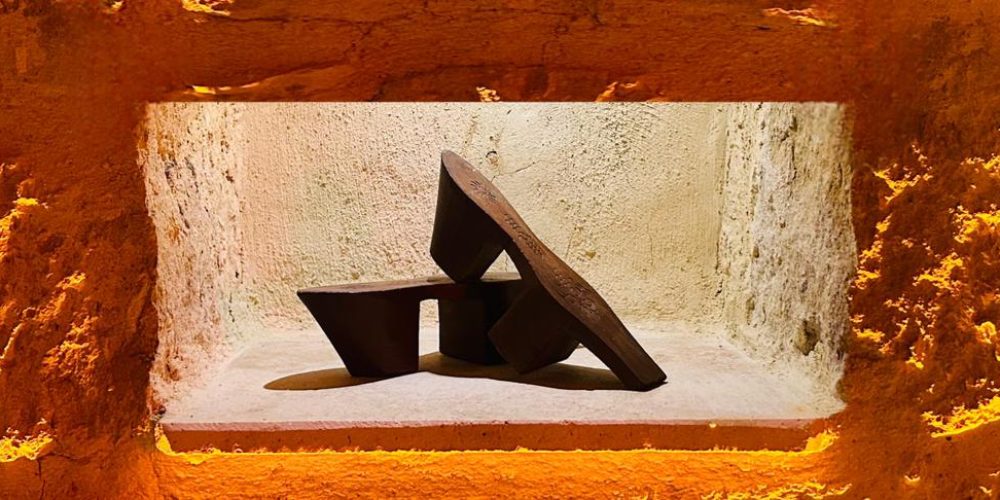
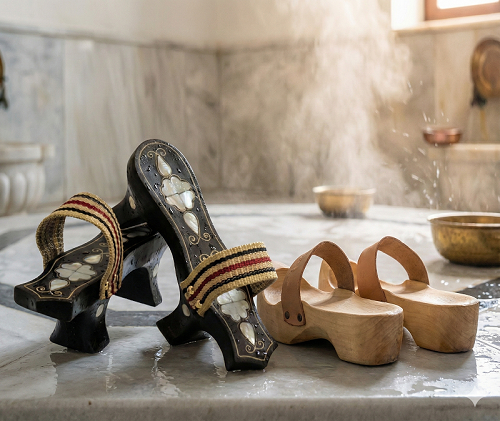
Nalın: It features a bridge-like structure set upon two high “feet”. The name originates from the Arabic word “na’leyn,” meaning a pair of shoes. Specifically designed for hammams, they were meticulously carved from precious woods such as boxwood, ebony, or walnut.
Takunya: This version has a lower, solid, and single-piece platform. It was a staple of daily life, commonly seen in front of houses, in mosque courtyards, or on the feet of young apprentices in the bazaar.
Height as a Status Symbol
In the Ottoman era, one could discern a woman’s social standing just by looking at the nalın she wore in the hammam. While basic models merely protected the feet from water, those belonging to wealthy women could exceed 25 centimeters in height. Walking in these required such skill that these ladies were often escorted by servants. Adorned with silver wires, mother-of-pearl inlays, and precious gemstones, these pieces were true works of art.
Musical Nalıns and the Bridal Bath
In our culture, models known as “Şıkırdaklı Nalın” (Lalin) were fitted with silver scales and small rings on their sides. The melody produced with every step was an indispensable part of the Bridal Bath (Gelin Hamamı). Gifted to the bride by the groom’s family, these special nalıns were considered the most precious items of the dowry.
Nalın Culture Today
Unfortunately, the hand-carved hornbeam and walnut nalıns have largely been replaced by mass-produced plastic slippers today. However, they haven’t vanished entirely; they live on as nostalgic decorative objects in modern homes or as a source of inspiration in ceramic and tile arts.
Remembering this elegant detail of Turkish culture is not just about preserving an object, but about protecting a way of life.