
How Wooden Clogs Defined Status in the Ottoman Hammam
Imagine stepping into a centuries-old Turkish hammam. Through the thick steam and the soft murmur of conversations, a distinct, rhythmic sound echoes on the warm marble floor: Tık… tık… tık…
This isn’t just the sound of someone walking; it is the sound of an arrival.
In the opulent world of Ottoman bath culture, where clothing was removed, social hierarchy needed a new way to express itself. The answer lay in an unexpected object: the Nalın.
These weren’t merely practical wooden clogs designed to protect feet from the wet, slippery floors. They were indicators of wealth, taste, and power. Today, we are stepping back in time to explore how a simple bathroom accessory became a dazzling status symbol.
Walking Tall: The Ultimate Power Move
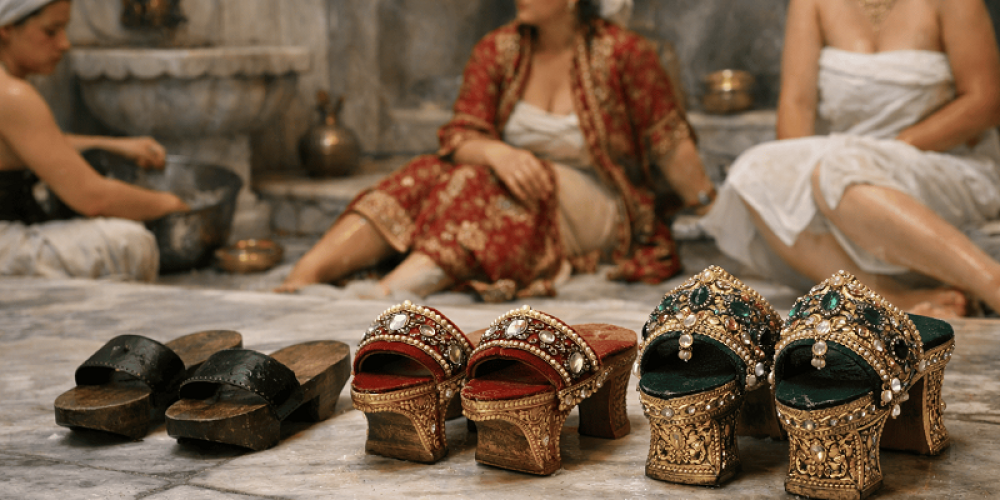
In the Ottoman era, you could instantly gauge a woman’s social standing just by glancing at her feet in the hammam. The rule was simple: the higher the nalın, the higher the status.
While regular nalın provided just enough clearance from the water, those belonging to wealthy, aristocratic women were perched dizzyingly high. Some reached heights of over 25 centimeters (nearly 10 inches)!.
Walking on these miniature stilts on wet marble required immense skill. In fact, it was practically impossible to do alone. Wearing such high nalın was a public demonstration that the wearer was wealthy enough to require servants to support her as she moved from one bathing basin to another. It was an impractical extravagance that only the rich could afford.
Art You Can Wear
Status wasn’t just about height; it was also about craftsmanship. Nalın were carved from precious woods like ebony, walnut, or boxwood.
A wealthy woman’s nalın was a piece of jewelry for the feet. They were heavily adorned with intricate mother-of-pearl inlays (sedef), silver wire filigree, and sometimes even precious gemstones. The straps were equally lavish, often made of velvet embroidered with gold or silver threads.